Hidden Costs of Wired Nurse Call Systems
Hospitals must improve care and still control cost.
Wired nurse call systems add hidden expense.
They can also slow response and raise staff stress.
Given these points, review the common impacts below.
Nurse fatigue: Staff walk to locate calls and track replies by hand.
This raises burnout risk.
It also increases turnover and hiring cost.
Delayed response: With a patient call button, every second counts.
Wired setups can hide the call source.
As a result, response time can rise during peak hours.
Patient dissatisfaction: Long waits reduce trust and satisfaction.
It can also hurt ratings and referrals.
In other words, it can reduce revenue.
Renovation expense: New beds often need rewiring and wall work.
This increases civil work and downtime.
A floor upgrade can cost ₹10–25 lakhs.
Real example: A 200-bed hospital spent ₹18 lakhs on renovation.
About 40% went to rewiring alone.
They are now comparing wireless nurse call systems.
Modern Fix: Wireless Nurse Call System
Wireless nurse call systems remove wiring and speed install.
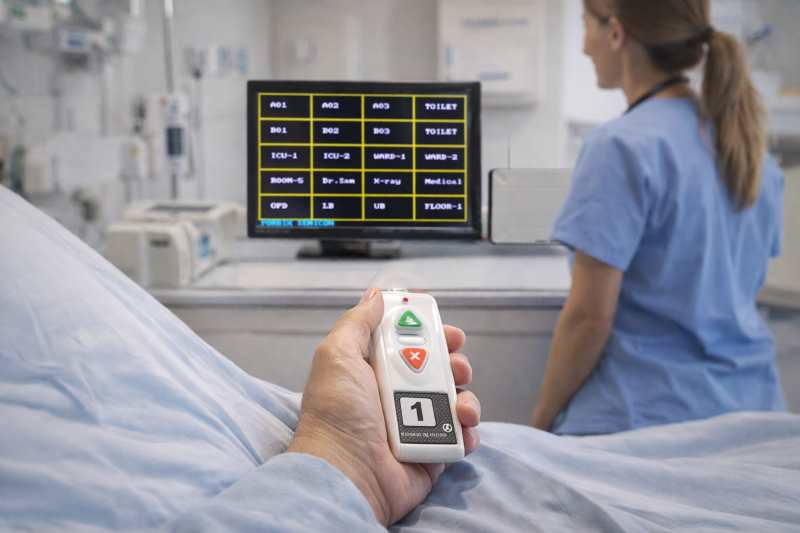
They improve visibility with LCD displays.
Some options add reporting and AI insights for admins.
FORBIX SEMICON® offers the FBXWNCS10-LCD system.
It supports ward workflows with a clear LCD monitor.
It also helps reduce disruption during upgrades.
Easy Installation with Zero Wiring
Wireless nurse call installation can finish fast.
It avoids construction.
There is no need to do these tasks.
- Break down walls or ceilings
- Run cables through existing infrastructure
- Coordinate with construction teams
- Disrupt patient care during installation
This cuts setup cost and reduces downtime.
A 100-bed hospital can save ₹8–12 lakhs on wiring work.
Consequently, ROI improves from the first rollout.
When you expand, add transmitters and set room identity.
No rewiring is required.
As a result, upgrades stay simple and predictable.
Room Identity with LCD Monitor Display
Clear call source visibility reduces delays.
See product details on nurse-call.php.
An LCD monitor can show these key details.
- Room number and bed identification
- Call priority levels
- Response status tracking
- Historical call data for pattern analysis
This removes guesswork for nurses and support staff.
They see the room at once.
Over a day, saved minutes become hours for patient care.
Each transmitter can be set with room and bed labels.
This helps in multi-bed rooms.
It also supports bed changes without confusion.
In addition, reporting can track call frequency and response time.
Some systems add AI summaries.
For instance, these insights can help admins.
- Predict peak call times and optimize staffing
- Identify rooms or patients requiring additional attention
- Generate reports for quality improvement initiatives
- Reduce false alarms through intelligent filtering
Expandable System for Future Growth
Wireless systems scale better than wired systems.
Expansion does not need re-engineering.
In the long run, this protects budgets and timelines.
The FBXWNCS10-LCD can start with 10 beds and expand later.
Add a transmitter per new bed.
In other words, it is plug and play.
- No construction costs for expansion
- No system downtime during upgrades
- No need to replace existing infrastructure
- Immediate scalability as your facility grows
Take the case of 50 new beds over five years.
Wireless expansion avoids major rewiring bills.
Savings can reach ₹20–30 lakhs in many layouts.
Checklist: Choose the Right Wireless System
Not all systems are equal.
Use this checklist to compare options.
It focuses on cost, reliability, and workflow fit.
Essential Features
Zero-Wiring Installation
Confirm there is no wiring or civil work.
True wireless installs fast.
Ask for a clear plan and timeline for each ward.
Clear Visual Display & Room Identification
Choose an LCD monitor that shows room and bed identity.
It should show call priority.
This helps reduce delays and mistakes.
Scalability & Expandability
Ensure you can add beds and wards without replacement.
Ask the max capacity.
Also ask the cost to add each new bed.
Reliability & Range
Check range across walls and floors.
Ask about repeaters if needed.
Reliability matters more than raw distance claims.
Intelligent Features & Reporting
Prefer call history and response reports.
Pattern analysis helps planning.
AI summaries can support staffing and audits.
Estimate Cost Savings and ROI
For example, use this simple comparison.
Scenario: A 150-bed hospital plans a nurse call upgrade.
Traditional Wired System Costs:
- Installation & Wiring: ₹25 lakhs
- System Equipment: ₹18 lakhs
- Construction/Disruption: ₹8 lakhs
- Total Initial Investment: ₹51 lakhs
Wireless System Costs:
- Installation (No Wiring): ₹3 lakhs
- System Equipment: ₹22 lakhs
- Construction/Disruption: ₹0 (minimal disruption)
- Total Initial Investment: ₹25 lakhs
Immediate Savings: ₹26 lakhs
Over five years, additional savings can add up.
- Lower burnout and turnover: ₹15–20 lakhs
- Better patient satisfaction and referrals: ₹10–15 lakhs
- Expansion without rewiring: ₹12–18 lakhs
Total 5-Year Savings: ₹63-79 lakhs
Key takeaway: Wireless savings are not only setup cost.
They improve workflow and response time.
Over time, ROI compounds through better operations.
Installation Plan and Timeline
If you upgrade, a typical rollout follows a clear plan.
Week 1: Plan rooms, beds, and call points.
Confirm range and repeaters.
Align with ward schedules and duty shifts.
Week 2: Install transmitters and LCD stations.
Setup can take minutes per room.
There is no wall cutting or dust.
Week 3: Test calls and train staff.
Confirm room identity labels and priorities.
Training fits into short sessions.
Week 4: Go live and tune alerts.
Review early call logs.
Then optimize workflows based on real data.
By comparison, wired installations can take 8–12 weeks.
They also cause noise, dust, and downtime.
FAQs: Wireless Nurse Call System Savings
How do wireless nurse call systems save hospitals money?
Wireless systems cut wiring and construction cost.
Install time is faster than wired.
Expansion needs transmitters, not rewiring.
How do wireless nurse call systems reduce nurse stress?
LCD displays show room and bed identity plus priority.
Nurses know where to go.
Response time improves, which reduces stress and burnout.
What to look for in a wireless nurse call system?
Look for zero-wiring install and clear LCD display.
Ensure scalability and range.
Add reporting and AI insights if you need audits.
How long does wireless nurse call installation take?
Wireless installs can take hours to a few weeks, based on size.
Wired installs often take 8–12 weeks and need construction.
Can a wireless nurse call system scale with growth?
Yes. Add beds by adding transmitters.
No rewiring or civil work is needed.
This can save ₹12–18 lakhs on future expansions.
Videos: Nurse Call System Installation
Watch full demos on our dedicated video pages.
Those pages work well for Google and mobile playback.


Conclusion: Better Care at Lower Cost
Wireless nurse call systems save cost and improve care.
They also reduce stress across wards.
All in all, value goes beyond equipment price.
- For Patients: Faster response, better care, and higher satisfaction
- For Nurses: Less strain, less burnout, more time for care
- For Administrators: Lower costs and better facility ratings
- For the Facility: Tech that grows with your needs
Modern systems can include reporting and AI insights.
They reduce hidden costs and inefficiencies.
In effect, they improve patient communication and safety.
The key question is not only about cost.
It is about response time and safety.
Without delay, the right setup can lift patient experience.